



Urban Company today
- ₹1,556 cr
- FY26 revenue, up 36% year on year
- ~82%
- Of India transaction value from repeat customers (FY25)
- 100×+
- Oversubscription of its ₹1,900 cr IPO (Sept 2025)
- 50k+
- Daily InstaHelp bookings within a year of launch
01 · The Company
The Company
Think about how you found a plumber, an electrician or a beautician in India ten years ago. You asked a neighbour, called a number someone had saved, and hoped for the best. There were no standard prices, no guarantee they’d show up on time, and no one to complain to if the job went wrong.
Urban Company set out to fix that. It was founded in October 2014 in Delhi NCR as UrbanClap, by Abhiraj Singh Bhal, Varun Khaitan and Raghav Chandra, starting life as a Facebook group before launching its website that November. It was renamed Urban Company in January 2020, and today runs a tech-led platform for home and beauty services across Indian cities, plus the UAE, Singapore and Saudi Arabia.
It became a unicorn in June 2021, raising $255 million at a $2.1 billion valuation, and listed on Indian stock exchanges in September 2025 with an IPO more than 100 times oversubscribed.
02 · The Details
From Marketplace to Full Stack
2014: an open marketplace. Urban Company began by listing almost anything: yoga at home, salon services, wedding photography, guitar lessons, cleaning, plumbing. It reached about 100 providers and 450 users in three months, and investors were interested. But it had no control over quality, which in this market is everything.
2015–2016: the pivot that found fit. The real problem wasn’t discovery; it was unprofessional providers, no training and opaque prices. So Urban Company stopped being just a listing and took control of the service itself, starting deep in one vertical, women’s beauty. It trained professionals, standardised prices and checked quality. Retention rose, average orders reached ₹2–3K, and it raised seed, Series A and Series B rounds within 2015. The cost was real: ₹20–50K to train each professional.
2017–2019: scale. With a model that worked, it invested in training, gave professionals loans for equipment, and shut down services that didn’t fit. It reached about 3 million customers, but this was a phase of high burn and low return.
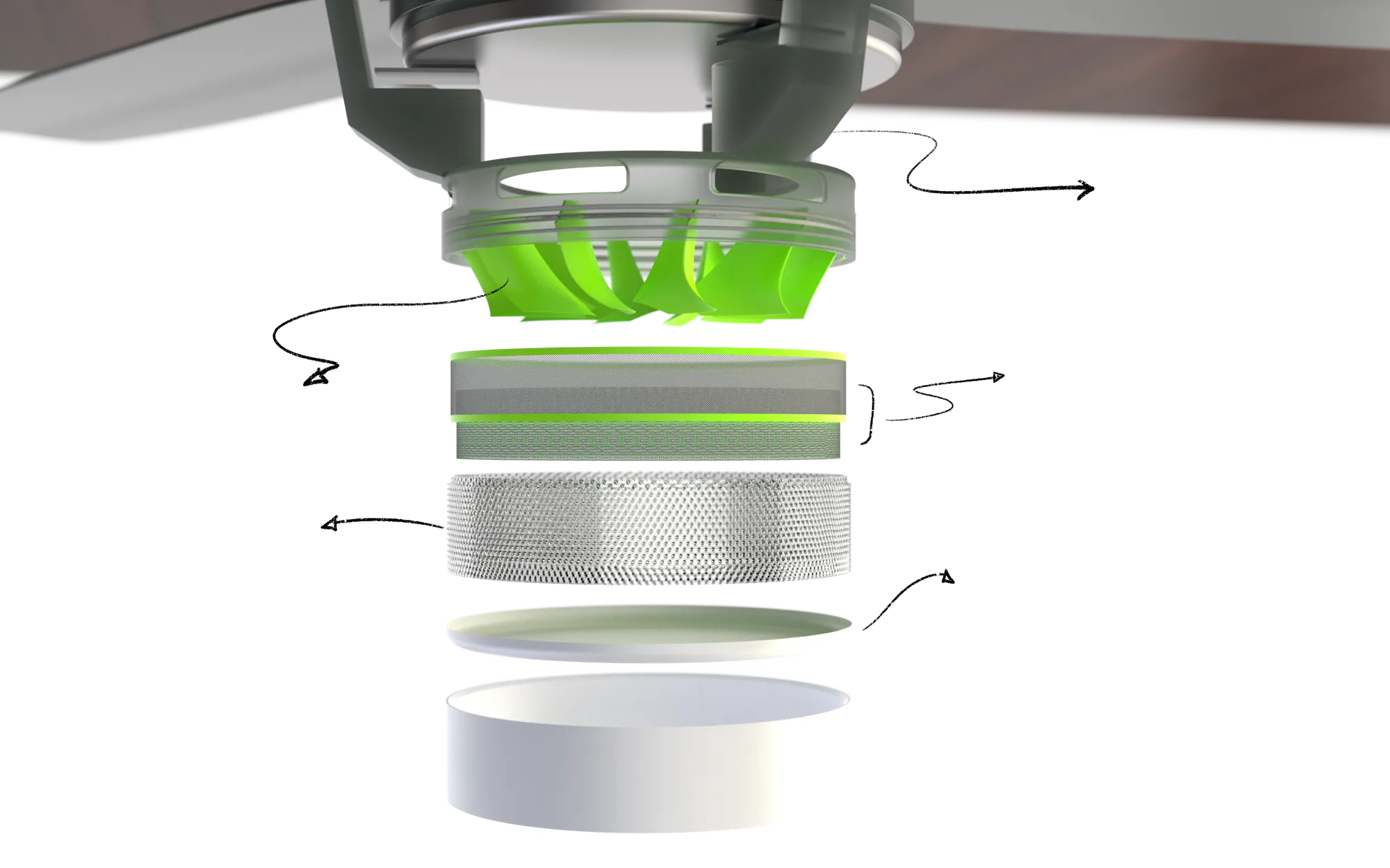
2023–2025: diversification and first profit. Urban Company started building growth engines that rely less on professionals’ time: Native water purifiers and smart door locks (2023), a bathroom-cleaning subscription and wall panels (2024), and InstaHelp, house help in 15 minutes, piloted in Mumbai in March 2025. FY25 was its first year of profit after tax.
02 · The Details
The Market & the Competition
We sized India’s home-services market at $55–60 billion in 2025, of which about $21 billion is urban households using the categories Urban Company serves. At an 8–12% share of that, its obtainable market is roughly $2 billion.
TAM
$55–60 billion
All home services in India, from handymen and cleaning to cooks, care at home and renovation.
SAM
~$21 billion
Urban households in the categories Urban Company serves.
SOM
~$2 billion
At an 8–12% share of the serviceable market.
Urban Company’s real competition isn’t another app; it’s the neighbourhood plumber and the local salon. Compared side by side, it doesn’t win on any single service. It wins by making every step predictable:
| Parameter | Unorganised offline | Organised offline | Urban Company |
|---|---|---|---|
| Discovery | Poor, depends on recommendations | Average, varies by category | Excellent: partners found early |
| Pricing | No standard rate cards | Priced after diagnosing the problem | Standard rate cards for every service |
| Delivery | Inconsistent, poor time discipline | Decent, with scheduled slots | Real-time scheduling |
| Service quality | Inconsistent | Little structured training or feedback | Professional training and quality checks |
| Post-service support | Inconsistent | Available | Robust, with a helpline |
| Fixes & insurance | Unavailable | Limited options | Available on the platform |
03 · The Business
How the Business Works
Most of Urban Company’s revenue, 80–85% in our analysis, comes from commissions on completed bookings. Around that core it has built smaller streams: selling tools and consumables to its professionals, memberships and subscriptions for frequent customers, lead-generation fees in variable-price categories, advertising, training fees, and its own Native consumer products, which earned ₹116 cr in FY25, up 303%.
| Year | Revenue | Growth | Net profit / loss |
|---|---|---|---|
| FY22 | ₹438 cr | n/a | −₹514 cr |
| FY23 | ₹637 cr | +45% | −₹308 cr |
| FY24 | ₹827 cr | +30% | −₹93 cr |
| FY25 | ₹1,144 cr | +38% | +₹240 cr* |
| FY26 | ₹1,556 cr | +36% | −₹235 cr |
*FY25 profit includes a one-time ₹211 cr deferred tax credit; adjusted EBITDA was about ₹11 cr. FY22–FY25 from our deck and the company’s filings; FY26 from its May 2026 results.
The table tells a clear story: steadily narrowing losses as the core business matured, a first profit in FY25 (partly thanks to a one-time tax credit), then a swing back to a loss in FY26. The cause is InstaHelp. In Q4 FY26 it earned ₹8.9 cr of revenue against a ₹118.7 cr segment loss, roughly ₹447 lost on every order, even as it passed 50,000 daily bookings in February 2026.
On the go-to-market side, Urban Company focuses on urban households, led by the big metros. It acquires customers through Facebook and local ads, referrals and partnerships, competes on value-led pricing with promotions and fixed monthly plans, and retains them through subscriptions, a well-trained partner base and fast, accountable support.
04 · My Take
The Roadmap We Drafted
As a team, we drafted a roadmap from Q1 FY24 to Q2 FY25 across four tracks, each moving from research to build, launch and scale:
| Track | Discover & build | Launch | Scale |
|---|---|---|---|
| Service revamp | Design updates, tech-stack evaluation, new feature integration | Bug fixes and service launch; post-launch monitoring | Feature enhancements, continuous improvement |
| Subscription models | Market research, pricing, competitor analysis; tier definition, payment integration | Trial period, soft launch, early-adopter program | Full rollout, promotions, retention features |
| Women empowerment initiative | Program design, stakeholder engagement, partner identification | Pilot with beauty & wellness MSMEs, training modules, mentorship | Success metrics, scale-up planning, impact assessment |
| InstaHelp | Market need analysis, feature specs, provider onboarding, quick-response system | Soft launch, feedback collection, service refinement | Full launch, marketing campaigns, continuous improvement |
04 · My Take
My Take
The most important decision Urban Company ever made was the 2015 pivot from listing services to owning them. A marketplace can match a customer with a provider, but it can’t promise the job will be done well. By training professionals, setting prices and standing behind the work, Urban Company turned trust into the product. That ~82% share of transaction value from repeat customers is what that trust looks like in a metric.
That same trust has to be earned on the supply side, and that is where I see the biggest risk. In 2021, partner protests over commissions and algorithmic blocking pushed the company to cut its commission cap from 35% to 25%. Every professional who leaves unhappy takes trust with them, so I’d treat partner earnings and fairness as a product problem, not just an HR one.
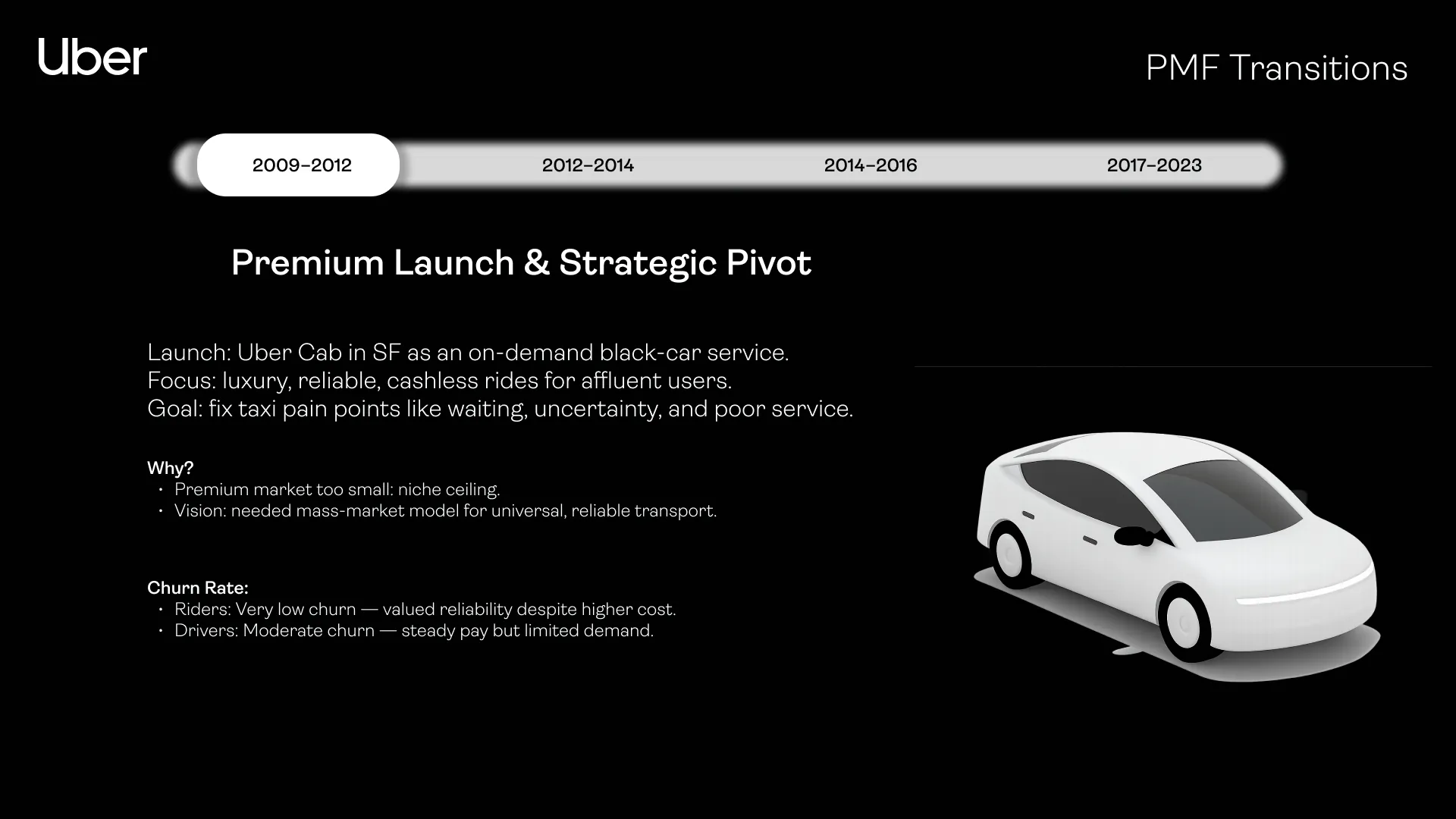
InstaHelp is the bet I find most interesting. Daily house help could turn Urban Company from something you use a few times a year into a daily habit, and 50,000 bookings a day in under a year shows the demand is real. But at a loss of about ₹447 per order, it is buying that habit with cash, much like Uber’s early land grab. I’d want to see contribution margin improving in each micro-market before expanding to the next.
I think Native is underrated. It sells hardware into homes that already trust Urban Company, grew 303% in FY25, and, unlike services, its revenue doesn’t depend on a professional’s time. It’s the clearest example of diversifying from the core customer rather than chasing new ones.
Looking back at our own work, I’d change two things. Our roadmap planned InstaHelp’s launch but not its unit economics; every track should have carried a success metric and a break-even condition before scaling. And our $2 billion SOM needed a sanity check: Urban Company’s India transaction value in FY25 was about ₹2,667 cr, roughly $0.3 billion, so reaching it implies 6–7× growth.
One more small lesson: InstaHelp launched as “Insta Maids” and was renamed within days after criticism that the name undermined the dignity of domestic workers. Language is part of the product, especially when your supply side is people.
04 · My Take
Sources
- Business Standard: Urban Company’s first consolidated net profit, FY25
- Angel One: FY25 profit helped by ₹211 cr deferred tax credit
- Entrackr: Q4 FY26 losses widen amid InstaHelp push
- Medianama: Urban Company lost ₹447 per InstaHelp order in Q4 FY26
- Urban Company IR: InstaHelp crosses 50,000 daily bookings
- Business Standard: Urban Company IPO subscription
- TechCrunch: $255M raise at $2.1B valuation (June 2021)
- Business & Human Rights Resource Centre: commission cap cut after 2021 protests
- Outlook Business: “Insta Maids” renamed to InstaHelp
- The CapTable: Urban Company’s rising Native product business